The Power of Belief: How Faith Strengthens the Meditative Mind
There’s a quiet power that flows through us when we close our eyes to meditate — a sense that something greater is listening, guiding, and holding space for our stillness. That presence is faith. In the hustle of modern life, where distractions pull us in every direction, meditation offers a sanctuary of silence. But without faith, that silence can feel empty or fleeting. Faith infuses it with meaning, turning a simple practice into a profound connection with the deeper currents of existence. It’s not about blind adherence to dogma; it’s about an inner conviction that supports our journey inward. (Free online Bible)
Click to listen to my Thunderstorm Recording
Imagine sitting in a quiet room, the world outside fading away. Your breath slows, your thoughts begin to settle. Yet, in that moment, a whisper of doubt might creep in: “Is this working? Am I wasting my time?” Faith steps in like a gentle anchor, reminding you that every breath is a step toward something meaningful. This isn’t just poetic—it’s a transformative force that has been recognized across cultures and eras. From ancient yogis in the Himalayas to contemporary mindfulness practitioners in bustling cities, the interplay between faith and meditation has empowered countless individuals to navigate the complexities of the human mind.
Faith isn’t just a religious concept; it’s the deep trust that life is unfolding with purpose. When combined with meditation, faith transforms from belief into lived experience — it becomes the heartbeat beneath the silence. In religious contexts, faith might mean devotion to a deity, like in Christianity’s prayerful contemplation or Buddhism’s trust in the Dharma. In secular terms, it’s belief in the process itself—the innate wisdom of the body and mind to heal and grow. This duality makes faith accessible to all, regardless of background. Studies in positive psychology, such as those from Harvard’s Mind/Body Institute, show that individuals with strong faith-based practices report higher levels of life satisfaction and lower stress levels. When woven into meditation, this trust amplifies the benefits, creating a synergistic effect that ripples into every aspect of life.
Consider the story of a busy executive named Sarah, who turned to meditation amid burnout. Initially, her sessions were mechanical—counting breaths to escape anxiety. But when she incorporated faith, affirming “I trust the universe’s timing,” her practice deepened. Distractions no longer derailed her; they became opportunities to reaffirm her belief. This shift didn’t happen overnight, but over months, it built resilience. Sarah’s experience mirrors what many discover: faith isn’t an add-on; it’s the foundation that makes meditation sustainable.
🌿 The Meeting Point Between Faith and Meditation
What happens when the quiet of meditation meets the trust of faith? It’s like the confluence of two rivers—one calm and introspective, the other bold and assured—merging into a powerful stream that carves deeper paths in the soul.
Faith invites us to release control, while meditation teaches us to be present. Together, they dissolve the boundaries between spiritual and mental peace. In meditation, we often encounter the ego’s resistance: the mind’s chatter, the body’s aches, the pull of unfinished tasks. Faith counters this by fostering surrender. In Christian mysticism, this is akin to “lectio divina,” where scripture reading blends with contemplative silence, building trust in divine providence. Similarly, in Hinduism, bhakti yoga emphasizes devotional faith alongside dhyana (meditation), creating a loop where belief fuels focus and focus reinforces belief.
When we meditate with faith — whether in God, the Universe, Divine Love, or a Higher Consciousness — we stop trying to force stillness. Instead, we rest in the knowing that stillness will find us. This isn’t passive; it’s active trust. Neuroscientists like Dr. Andrew Newberg have scanned the brains of meditators during faith-infused practices, revealing increased activity in the prefrontal cortex—the seat of decision-making and emotional regulation. Faith here acts as a catalyst, making the meditative state more accessible and enduring.
Historical figures exemplify this meeting point. Saint Teresa of Ávila, a 16th-century Carmelite nun, described her meditations as “interior castles” where faith led her through chambers of the soul. Her writings detail how doubt would arise, but unwavering belief in God’s presence transformed it into ecstasy. In Eastern traditions, the Tibetan Buddhist practice of Tonglen—breathing in suffering and out compassion—relies on faith in interconnectedness. Without it, the practice crumbles; with it, it heals. When we believe there’s a loving presence guiding us, the silence feels safer — and deeper.
This safety net allows vulnerability. In group meditations, like those in yoga retreats, participants often share how shared faith—chanting “Om” together—creates a collective energy that individual practice lacks. It’s a reminder that faith and meditation aren’t solitary; they thrive in community, echoing ancient sanghas or church gatherings. Expanding further, consider cultural variations.
In Indigenous traditions, like Native American vision quests, meditation-like fasting and solitude are underpinned by faith in ancestral spirits. Modern adaptations, such as apps like Insight Timer, incorporate guided meditations with affirmations of universal faith, reaching millions. The key is personalization: what resonates as “faith” for one might be cosmic trust for another, but the outcome is unified—a strengthened meditative mind.
🧠 The Science of Belief and the Calm Mind
Modern research shows that belief itself can reshape the brain. Faith activates neural pathways associated with safety, compassion, and optimism. This isn’t woo-woo; it’s backed by empirical evidence. In meditation, this sense of safety quiets the mind’s endless “what ifs.”
When we approach our practice with faith — “I trust that I’m exactly where I need to be” — our brain releases tension. We stop wrestling with distractions and begin floating in the flow of awareness. Dr. Richard Davidson’s work at the University of Wisconsin-Madison on long-term meditators, including monks with deep faith, reveals thicker prefrontal cortices and enhanced gamma waves, indicators of heightened awareness and emotional balance.
Faith, in this sense, isn’t just spiritual — it’s neurological. It strengthens our resilience and keeps the meditative mind steady even in life’s storms. During crises, like the COVID-19 pandemic, faith-based meditation groups reported lower depression rates, per a Lancet study (2021). This resilience stems from rewiring: faith reduces cortisol (stress hormone) spikes, allowing meditation to access deeper theta brainwaves associated with creativity and intuition.
Faith quiets the ‘what ifs’ of the mind. Evolutionary psychology suggests humans are wired for belief systems—they provided survival advantages in ancient tribes. Today, this translates to mental health benefits. Cognitive Behavioral Therapy (CBT) often incorporates belief reframing, akin to faith affirmations in meditation, proven to alleviate anxiety in randomized trials.
Delving deeper, faith influences the vagus nerve, part of the parasympathetic system that promotes “rest and digest.” Meditating with belief tones this nerve, improving heart rate variability—a marker of emotional regulation. Books like “How God Changes Your Brain” by Newberg and Waldman compile fMRI data showing faith practices enlarge the thalamus, enhancing sensory processing during meditation.
Personal anecdotes abound: athletes use visualization (a form of faith-filled meditation) to boost performance, with studies showing 20-30% improvements in outcomes. In therapy, mindfulness-based stress reduction (MBSR) programs integrate secular faith in self-compassion, yielding results comparable to antidepressants.
Critics might argue science demystifies faith, but it actually validates it. Quantum physics analogies—like observer effect in meditation—suggest belief shapes reality, echoing ancient wisdom. Thus, the calm mind isn’t accidental; it’s a neuro-spiritual alliance.
🌸 Meditation as a Space to Strengthen Faith
Meditation isn’t only mental training; it’s a spiritual conversation. In silence, the voice of faith becomes easier to hear — a subtle whisper reminding us that we’re never alone. This dialogue builds over time, turning fleeting beliefs into unshakeable convictions.Here are some ways meditation deepens belief:
Sitting in stillness while silently repeating a sacred phrase or affirmation of trust. Known as mantra meditation, this draws from Transcendental Meditation (TM), where a personal mantra evokes faith. Repeating “So Hum” (I am That) aligns breath with universal identity, fostering trust in oneness.
Visualizing divine light enveloping your body as you breathe. In Kundalini yoga, this chakra-based visualization channels faith into energy centers. Practitioners report heightened intuition, as if divine assurance flows through visualized light.
Listening inwardly for guidance or reassurance from your Higher Self or Source. This contemplative listening, rooted in Quaker silence or Vipassana, invites synchronicities. Journaling post-session often reveals insights, reinforcing faith through evident patterns.
Expanding on these, incorporate breathwork: Pranayama with faith intentions, like alternate nostril breathing while affirming divine balance, harmonizes hemispheres of the brain, per EEG studies.When we turn inward with reverence, meditation stops being just a technique — it becomes a sacred meeting with something infinite. Historical texts like the Bhagavad Gita advise meditating with faith (shraddha) for true yoga. In Sufism, dhikr (remembrance) meditations whirl dervishes into ecstatic union, strengthening belief in divine love.
Group dynamics amplify this: in faith communities, shared meditations like Centering Prayer build collective faith, reducing isolation. Online platforms now offer virtual retreats, making this accessible globally.
Challenges arise—doubt during dry spells—but faith views them as purifiers. Saint John of the Cross’s “dark night of the soul” describes meditation’s role in emerging stronger. Modern teachers like Tara Brach emphasize “radical acceptance,” blending faith with mindfulness to navigate shadows.
Ultimately, consistent practice etches faith into the subconscious. Over years, meditators often experience “peak states”—moments of unity that solidify belief beyond words.
🕯️ Faith as the Antidote to Mental Resistance
Every meditator knows the tug of doubt: “Am I doing this right?” “Why can’t I quiet my mind?”
Faith is the bridge that carries us over that resistance. It reminds us that even restlessness has purpose. When frustration arises, a faithful mindset reframes it:
Not as failure, but as part of your spiritual unfolding.
Not as distraction, but as a lesson in surrender.
Faith turns discipline into devotion. It transforms meditation from a task to a trust fall into the divine.
🌞 Simple Ways to Combine Faith and Meditation
Here are a few gentle ways to bring faith into your daily stillness:
Set an intention of trust: Before meditating, say quietly, “I open to divine peace and guidance.”
Use sacred repetition: Repeat a word or phrase that carries spiritual meaning — like “peace,” “love,” “Amen,” or “Om.”
Visualize divine energy: Imagine a soft light above your head filling your heart with warmth and faith.
End with gratitude: Close your meditation by thanking the Higher Being or Source for your breath, your stillness, and your growth.
Journal after your session: Write down any insights, sensations, or intuitive messages that surfaced in the silence.
These simple rituals help bridge the inner world of meditation with the outer strength of faith.
🌼 Faith in Everyday Moments
Faith doesn’t live only in temples, churches, or meditation cushions — it blooms in the small moments of life.
Each time you breathe deeply before reacting, each time you choose kindness over fear, you’re practicing faith. Meditation simply sharpens your awareness of it.
When we begin to see the divine in our daily breath, faith becomes not something we seek — but something we remember.
💫 The Quiet Power of Believing
Faith gives meditation wings; meditation gives faith roots. Together, they create a state of peace that neither can fully offer alone.
When we sit in stillness with faith, we stop searching for peace — and start remembering it.
✨ Try this practice: Tonight, before you meditate, whisper: “I am safe. I am guided. I am loved.” Then sit in the silence that follows, and let faith finish the sentence.
This website uses cookies to improve your experience. We'll assume you're ok with this, but you can opt-out if you wish. Cookie settingsACCEPT
Privacy & Cookies Policy
Privacy Overview
This website uses cookies to improve your experience while you navigate through the website. Out of these cookies, the cookies that are categorized as necessary are stored on your browser as they are essential for the working of basic functionalities of the website. We also use third-party cookies that help us analyze and understand how you use this website. These cookies will be stored in your browser only with your consent. You also have the option to opt-out of these cookies. But opting out of some of these cookies may have an effect on your browsing experience.
Necessary cookies are absolutely essential for the website to function properly. This category only includes cookies that ensures basic functionalities and security features of the website. These cookies do not store any personal information.
Any cookies that may not be particularly necessary for the website to function and is used specifically to collect user personal data via analytics, ads, other embedded contents are termed as non-necessary cookies. It is mandatory to procure user consent prior to running these cookies on your website.

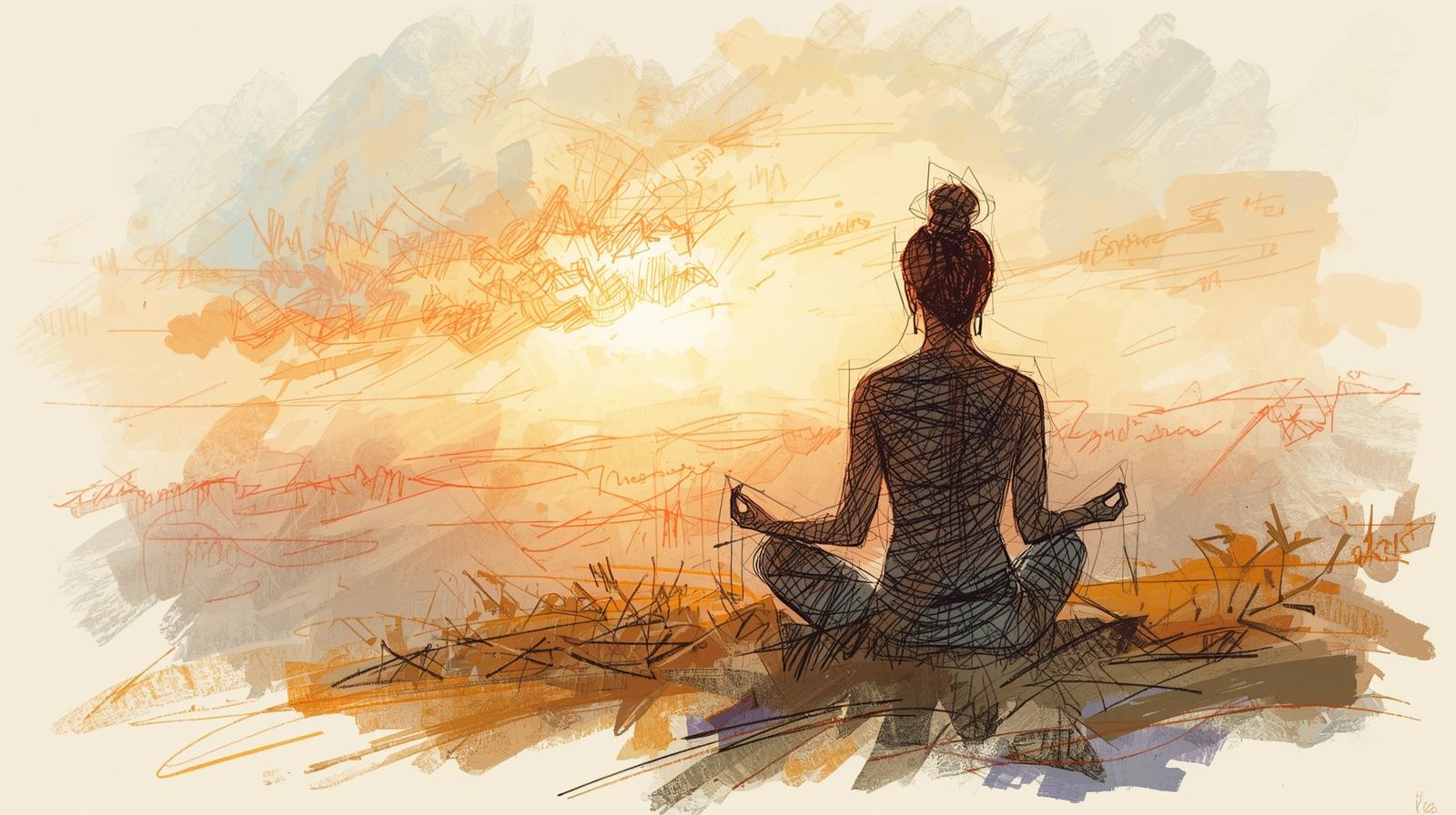

 Faith isn’t just a religious concept; it’s the deep trust that life is unfolding with purpose. When combined with meditation, faith transforms from belief into lived experience — it becomes the heartbeat beneath the silence. In religious contexts, faith might mean devotion to a deity, like in Christianity’s prayerful contemplation or Buddhism’s trust in the Dharma. In secular terms, it’s belief in the process itself—the innate wisdom of the body and mind to heal and grow. This duality makes faith accessible to all, regardless of background. Studies in positive psychology, such as those from Harvard’s Mind/Body Institute, show that individuals with strong faith-based practices report higher levels of life satisfaction and lower stress levels. When woven into meditation, this trust amplifies the benefits, creating a synergistic effect that ripples into every aspect of life.
 Faith invites us to release control, while meditation teaches us to be present. Together, they dissolve the boundaries between spiritual and mental peace. In meditation, we often encounter the ego’s resistance: the mind’s chatter, the body’s aches, the pull of unfinished tasks. Faith counters this by fostering surrender. In Christian mysticism, this is akin to “lectio divina,” where scripture reading blends with contemplative silence, building trust in divine providence. Similarly, in Hinduism, bhakti yoga emphasizes devotional faith alongside dhyana (meditation), creating a loop where belief fuels focus and focus reinforces belief.
 Placebo studies illustrate belief’s power: patients believing in a treatment experience real physiological changes, even if the pill is sugar. Similarly, in meditation, faith in the practice triggers the release of neurotransmitters like dopamine and serotonin. A study published in the Journal of Neuroscience (2018) found that religious believers meditating showed reduced amygdala activity—the brain’s fear center—leading to profound calm.