

AI Anxiety in 2026: 5 Mindfulness Strategies for Professionals Worried About Job Security
The New Reality of Work
2026 isn’t the future anymore—it’s the present-day reality of work. Artificial Intelligence isn’t just a buzzword or a project on the horizon; it’s embedded in daily workflows, decision-making systems, and performance tools across industries. From customer service chatbots that handle complex queries to predictive analytics that shape strategic decisions, AI has become as fundamental to modern work as email or spreadsheets once were.
That integration has delivered undeniable productivity gains. Companies report faster turnaround times, reduced operational costs, and the ability to process volumes of data that would have been impossible just years ago. Yet alongside these benefits, a shadow has emerged: a new psychological experience that researchers and workplace psychologists are calling “AI Anxiety.”
Research shows that the rise of AI and automation correlates with heightened job insecurity, stress, anxiety, and even burnout among employees navigating this shift. Studies examining AI exposure have found links to increased worry about job stability and work stress, particularly among those unsure how these technologies will reshape their roles or whether their skills will remain relevant in an AI-augmented workplace.
If you’ve ever felt like you’re running a race against algorithms that never rest, never take breaks, and seem to improve exponentially while you’re just trying to keep up—you are far from alone. This feeling isn’t a personal failing or a sign of weakness. It’s a natural human response to rapid, uncertain change that directly affects your livelihood and sense of professional identity.
Why Mindfulness Matters Now More Than Ever
Fortunately, adapting to this new landscape doesn’t require you to become a machine yourself. You don’t just need technical skills to thrive—you need practical tools to care for your nervous system, regulate your emotions, and maintain a healthy mindset. This is where mindfulness becomes essential.
Mindfulness isn’t a soft add-on or New Age wishful thinking. It’s a strategy grounded in decades of psychology and neuroscience research that helps you remain centered, resilient, and purposeful in a rapidly changing world. Studies have demonstrated that mindfulness practices can reduce cortisol levels, enhance emotional regulation, improve focus, and build psychological resilience—exactly the capacities you need when facing uncertainty.
Here are five science-backed mindfulness strategies designed specifically to help you transform AI anxiety into focused energy and clarity.
1) Practice “Micro-Shifting” Your Focus
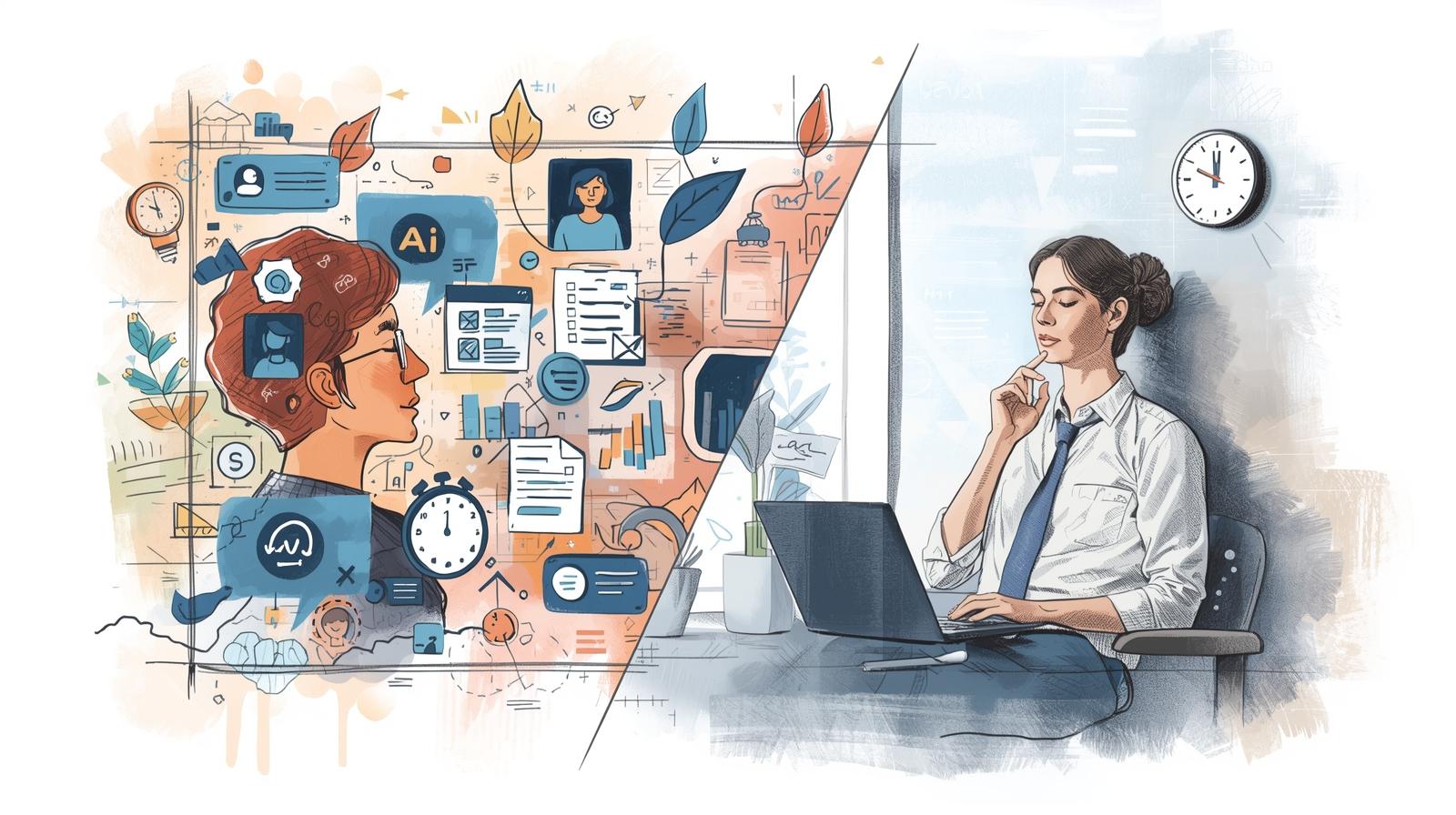 One of the greatest stressors in the AI era is constant cognitive overload—the compulsion to check dashboards, notifications, or AI suggestions every few minutes. Modern work environments encourage what psychologists call “continuous partial attention,” where you’re never fully focused on any single task. Instead, your attention fragments across multiple demands: the AI tool suggesting edits, the notification about a new automated report, the prompt you need to refine, the dashboard showing real-time metrics.
This fragmented attention doesn’t just reduce productivity—it fuels anxiety and diminishes your sense of control. When your brain never gets a chance to complete a thought or finish a task without interruption, it remains in a state of low-level stress. Over time, this chronic activation wears down your cognitive resources and emotional reserves.
The Technique
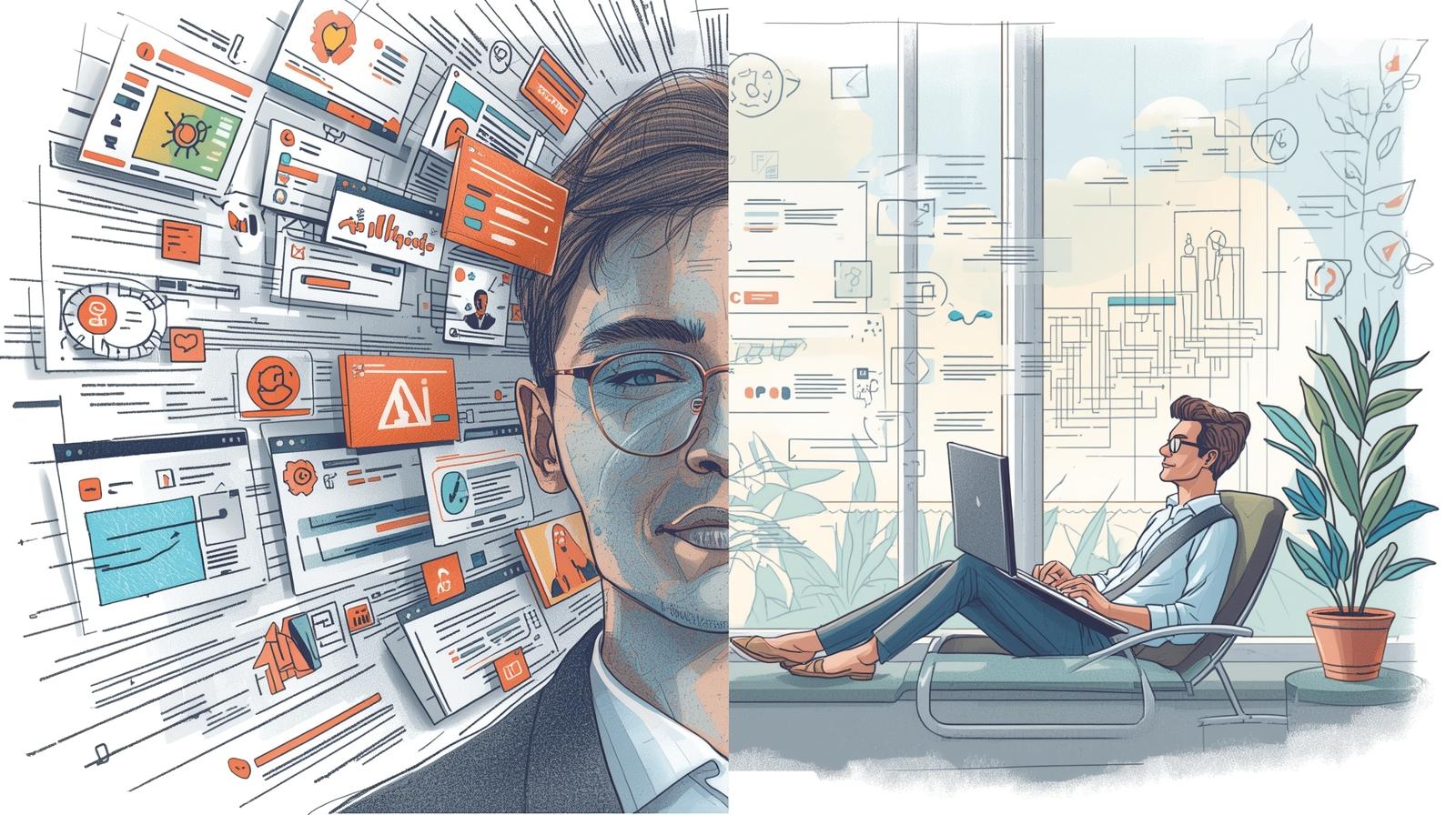 Insert intentional “Human-Only” breaks into your day—short periods (as little as 5 minutes every hour) where you deliberately step away from screens, notifications, or AI prompts. During these micro-shifts, engage in activities that require no digital input: look out a window and observe the weather, stretch your body mindfully, take a brief walk, or simply sit with your eyes closed and focus on your breathing.
This isn’t distraction or procrastination—it’s neuro-regulation. These micro-shifts allow your brain to reset and your attention to recalibrate, helping you return to work with intention rather than operating from a place of constant reaction.
Why It Matters
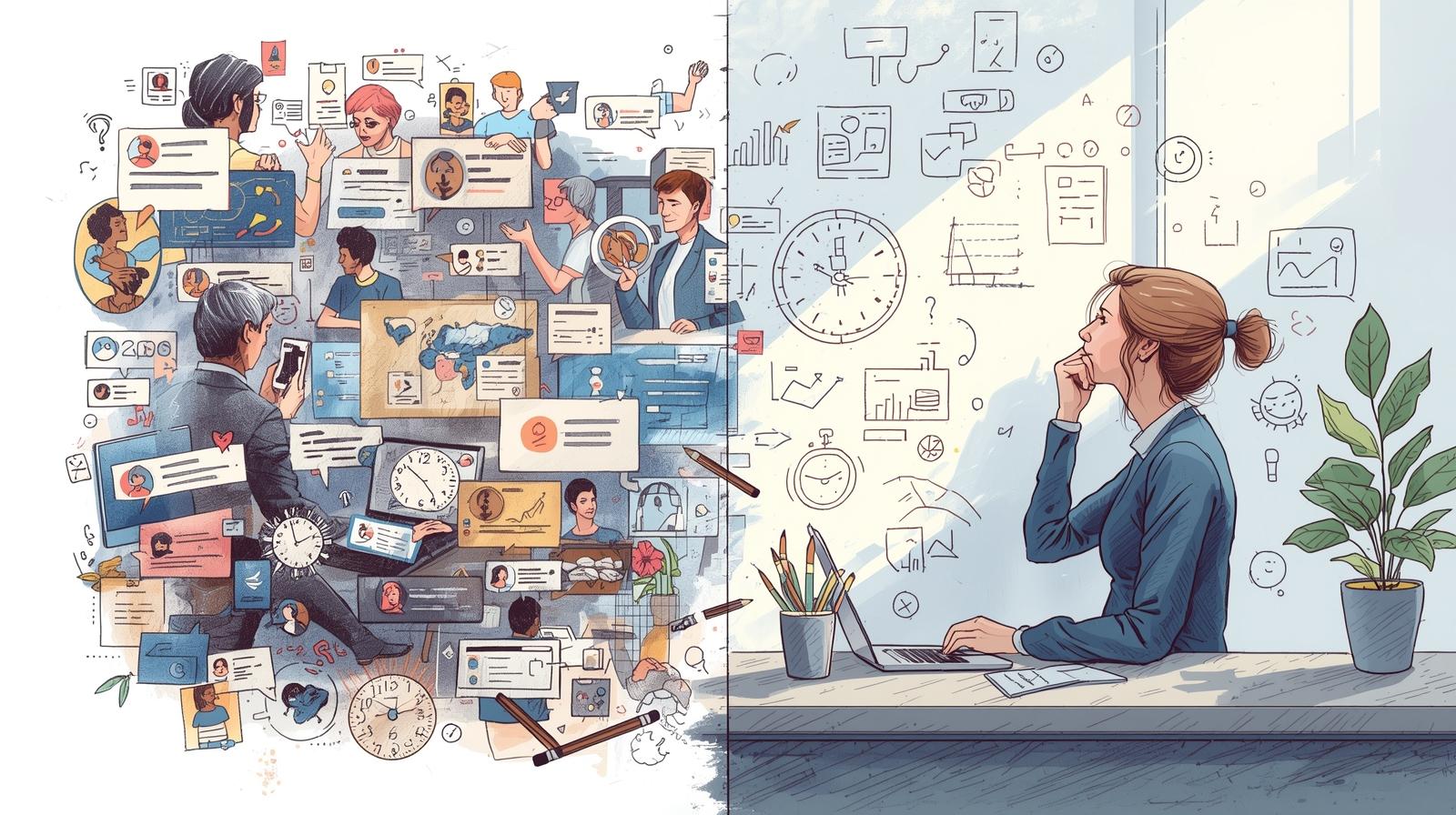 Focused breaks counteract hyper-connectivity and rumination—a known trigger for anxiety disorders—while reaffirming your own autonomy over how your time and attention are spent. Research in stress psychology and occupational health demonstrates that mindful breaks and controlled attention shifts reduce anxiety symptoms and improve emotional regulation. One study found that workers who took regular brief breaks reported lower emotional exhaustion and higher job satisfaction than those who worked continuously.
Moreover, these breaks create space for what neuroscientists call “default mode network” activity—the brain’s resting state that’s associated with creativity, insight, and long-term planning. Paradoxically, stepping away from your work often allows breakthrough thinking that constant engagement prevents.
Implementation Tips
Set a gentle timer or use calendar blocks to remind yourself to take these breaks. Start with just three 5-minute breaks during your workday and gradually increase. Notice how you feel before and after each break. Track whether these pauses help you return to tasks with greater clarity or reduce the background hum of anxiety.
2) Strengthen “Human-Only” Skills Through Mindfulness
 Many professionals feel uneasy not because AI is merely catching up to them, but because it demonstrably outperforms them in specific tasks. An AI can analyze data faster, write code with fewer errors, or generate first drafts in seconds. This can create a demoralizing feeling that your hard-won expertise is being commoditized or rendered obsolete.
Yet here’s the critical insight: AI cannot replace core human capacities like empathy, nuanced value judgment, ethical reasoning, and complex relational insight. These are often dismissed as “soft” skills, but in 2026, they’re actually survival skills—the capabilities that make you irreplaceable.
The Strategy
In your meditation or reflective practice, consciously focus on developing empathy, compassion, and awareness of others’ emotional states. Techniques like Metta meditation (also called loving-kindness meditation) offer a structured approach. In this practice, you intentionally generate goodwill toward others—starting with yourself, then extending to loved ones, colleagues, neutral acquaintances, and eventually even difficult people.
Begin with five minutes daily. Sit comfortably, close your eyes, and silently repeat phrases like “May I be safe, may I be healthy, may I be at ease.” Then extend these wishes to others: “May you be safe, may you be healthy, may you be at ease.” Notice any resistance or difficulty that arises, and simply acknowledge it without judgment.
Beyond formal meditation, bring mindful awareness to your daily interactions. When a colleague speaks, practice truly listening rather than formulating your response. Notice their body language, tone, and emotional subtext. Ask yourself what they might be feeling beneath their words.
The Goal
 By nurturing your emotional awareness and interpersonal skills, you strengthen your human premium—the unique value humans bring that AI cannot authentically emulate. While an AI might analyze sentiment in text or generate sympathetic-sounding responses, it cannot genuinely feel concern for another person’s wellbeing, understand complex cultural contexts, or navigate the subtle dynamics of human relationships.
These capabilities become increasingly valuable as more routine tasks become automated. Leadership, conflict resolution, mentorship, ethical decision-making, and building organizational culture all depend on sophisticated human skills that remain firmly in our domain.
3) Practice “Active Inquiry” Meditation
There’s a well-documented psychological principle: what we resist persists. Trying to suppress fearful thoughts about AI and job security typically backfires, causing those thoughts to intrude more frequently and with greater intensity. Instead of fighting your fears, try bringing those apprehensions into a structured contemplative space where they can be explored safely.
The Practice
Set aside 10-15 minutes in a quiet space where you won’t be interrupted. Sit comfortably, close your eyes, and take several deep breaths to settle your mind. Then, with genuine curiosity rather than judgment, ask yourself specific questions:
First, identify the fear: “What specific work task am I really afraid AI will take from me?”
Be honest and precise. Rather than vague worries like “AI will replace me,” drill down to specifics. Perhaps you’re concerned that AI will handle the data analysis you currently do, or write the first drafts of reports, or answer customer questions that used to require your expertise.
Then, explore possibility: “If AI handles that task, what new creative or relational work might I be freed up to do?”
This isn’t about toxic positivity or denying legitimate concerns. It’s about examining whether the loss you fear might simultaneously create unexpected opportunities.
The Shift
Often, through this honest inquiry, you’ll discover something surprising: the fear isn’t about being replaced entirely—it’s about losing specific tasks that, while part of your role, may not be the most meaningful or engaging aspects of your work. Many people find they’re actually anxious about losing repetitive, predictable tasks that provide a sense of security through familiarity, even if those tasks aren’t particularly fulfilling.
If AI can handle the routine data entry, report generation, or initial customer inquiries, what might you do with that reclaimed time? Perhaps deeper strategic thinking, mentoring junior colleagues, developing new approaches to persistent problems, building key relationships, or creating innovative solutions that require human insight.
This practice transforms your relationship with change from pure threat to a more complex picture that includes both challenges and possibilities.
4) Use Somatic Grounding to Reduce “Prompt Stress”
Today’s workers increasingly experience anxiety around what some are calling “prompt stress”—the pressure to craft perfect prompts for AI tools or ensure AI systems understand their needs correctly. This is particularly acute when performance evaluations depend on how effectively you can leverage AI tools, or when colleagues seem to get better results from the same systems you’re struggling with.
This creates a peculiar modern anxiety: the fear of not being good enough at communicating with the very tools that are supposed to make your work easier.
The Technique
Before interacting with an AI tool—especially when you notice tension building—try the 5-4-3-2-1 grounding exercise. This simple practice engages your senses to anchor you in the present moment:
- 5 things you can see: Look around and name five objects in your environment
- 4 things you can touch: Notice four textures—your chair, your clothing, your desk, the temperature of the air
- 3 things you can hear: Identify three sounds, even subtle ones like distant traffic or the hum of electronics
- 2 things you can smell: Notice two scents, or imagine two pleasant smells if none are apparent
- 1 thing you can taste: Note any taste in your mouth, or imagine tasting something pleasant
This entire sequence takes only 1-2 minutes but has powerful effects on your nervous system.
Why It Works
Somatic grounding interrupts anxiety loops by engaging your senses and physiology directly. When you’re anxious, your nervous system activates the fight-or-flight response—increasing heart rate, shallowing breathing, and narrowing focus to potential threats. This makes clear thinking difficult and increases the likelihood of making mistakes, which then reinforces your anxiety in a vicious cycle.
Sensory grounding shifts your nervous system out of fight-or-flight mode and back into a calmer state where rational thinking and problem-solving become accessible again. This technique is widely used in trauma therapy, stress reduction, and anxiety management because it works directly with the body rather than trying to talk yourself out of anxious thoughts.
When you approach AI tools from a grounded, calm state, you’re more likely to craft effective prompts, interpret results accurately, and troubleshoot problems without spiraling into self-criticism or panic.
5) Reframe AI as a Collaborator, Not a Competitor
 Perhaps the most powerful intervention for AI anxiety doesn’t involve any special technique at all—it’s simply shifting your fundamental mindset about what AI represents. Your mental frame around AI shapes every emotional reaction you have toward it.
When you view AI as a threat or competitor, you trigger your brain’s defensive responses. You become hypervigilant, constantly scanning for evidence of replacement or obsolescence. Every news article about AI advancement feels personal. Every successful AI implementation seems like another nail in your professional coffin.
Conversely, when you see AI as a tool or collaborative partner, you engage different neural pathways associated with curiosity, learning, and problem-solving. The same AI capabilities that seemed threatening suddenly appear as resources you can leverage.
The Mindfulness Shift
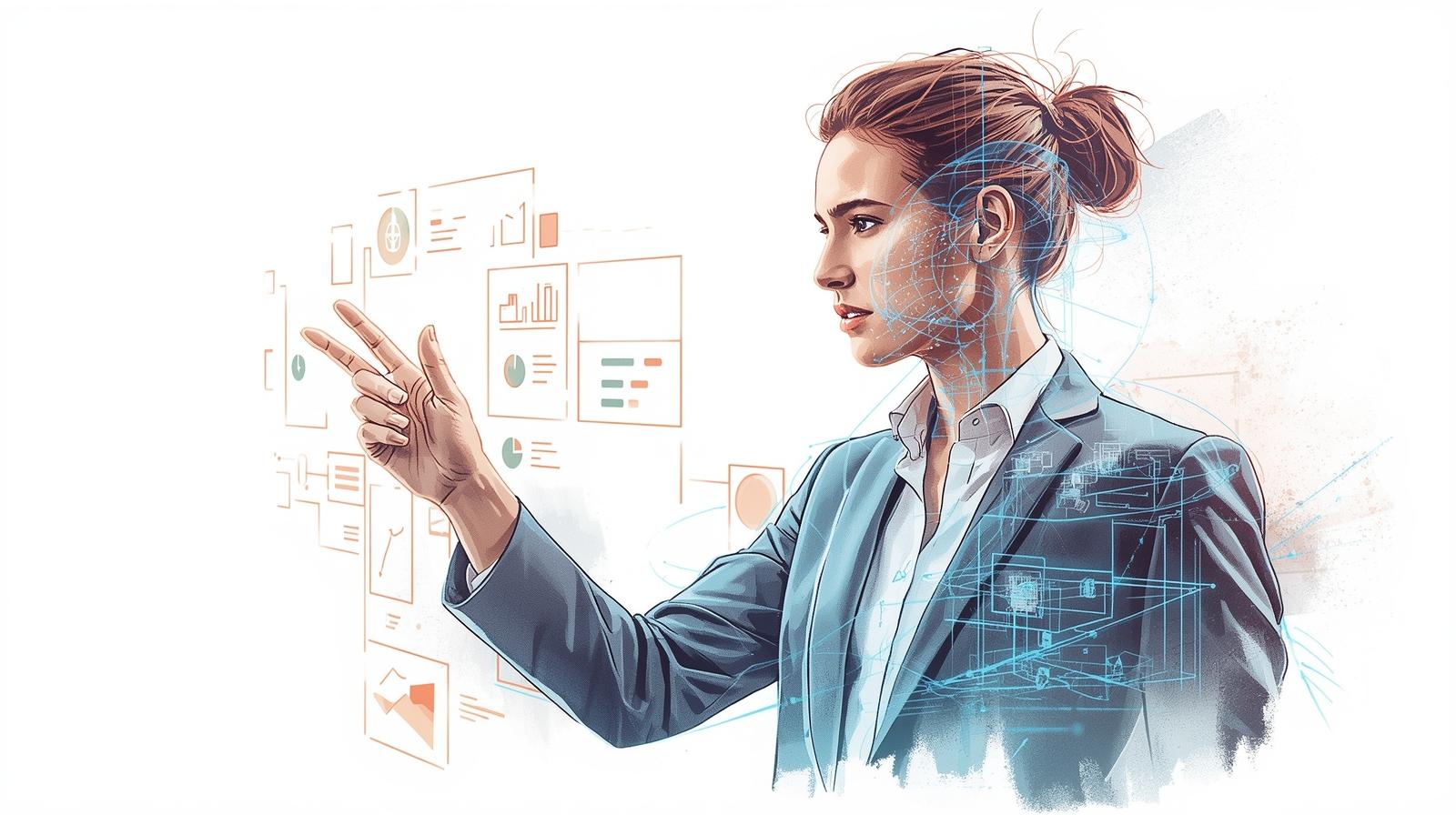 Each morning, before you begin work, take two minutes for a simple visualization. Imagine the AI systems you use not as faceless entities replacing you, but as assistants or collaborators—like junior team members who excel at certain tasks but still need your guidance, judgment, and oversight.
Picture yourself directing these tools purposefully, combining their processing power with your human insight, creativity, and wisdom. See yourself as the conductor of an orchestra where AI represents certain instruments—powerful and capable, but requiring human artistry to create something meaningful.
Pair this visualization with a simple mantra such as: “I am the conductor; technology is the instrument,” or “AI handles tasks; I create meaning,” or whatever phrase resonates with you personally.
This isn’t self-deception or empty affirmation. It’s deliberate framing that acknowledges reality—you do have agency in how you work with these tools—while reducing the catastrophic thinking that anxiety produces.
Building a Sustainable Practice
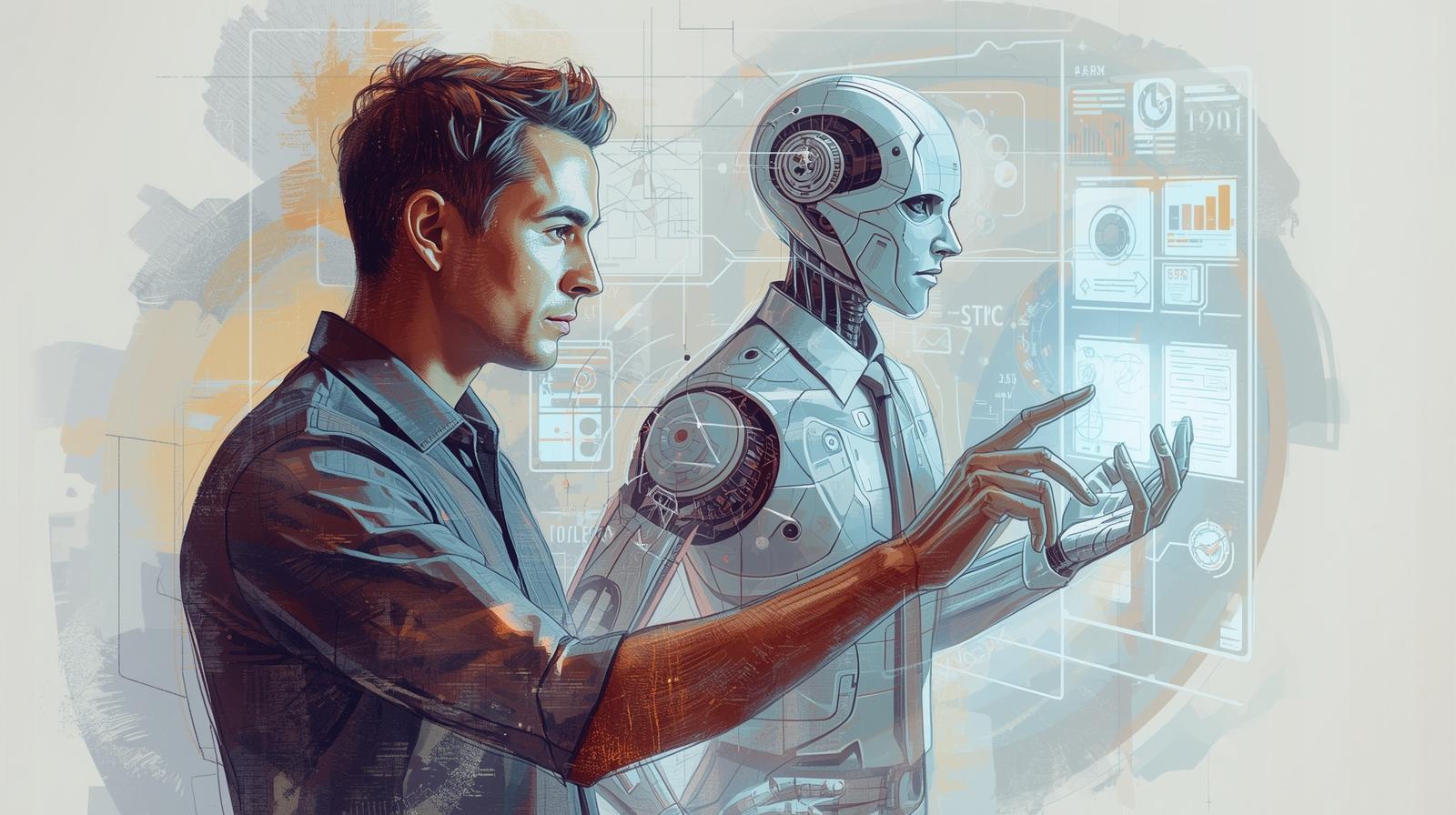 Start small with just one mantra and one brief morning visualization. Notice over several weeks whether this practice affects how you feel when working with AI tools or when hearing news about AI advancement. Many people report that this simple reframe reduces reactivity and increases a sense of professional agency.
Final Thoughts: The Resilient Professional in 2026
The professionals who thrive in this era aren’t necessarily those with the fastest typing skills, the most technical certifications, or the deepest programming knowledge. They are the ones who stay calmest under uncertainty—because calm minds can adapt, think deeply, make thoughtful decisions, and maintain their wellbeing through inevitable changes.
Studies examining workplace adaptation show that integrating mindfulness and coping strategies with proactive learning, empathy development, and self-regulation can buffer the negative psychological effects of rapid technological change. These practices don’t just lower stress levels—they enhance professional engagement, improve interpersonal relationships, and support the kind of clear thinking that complex challenges require.
AI will continue evolving. The specific tools and capabilities available in 2026 will seem quaint in just a few years. But your capacity for presence, emotional intelligence, clear thinking, and human connection? Those are timeless capabilities that become more valuable precisely as technological change accelerates.
So as AI evolves, let your mindset evolve with it—not through forced optimism or denial of legitimate concerns, but through practices that ground you in your humanity. Approach this era with curiosity about what you might learn, confidence in your unique human capacities, and the centered presence that allows you to respond thoughtfully rather than react fearfully.
The future belongs not to those who resist change or those who surrender to it, but to those who can hold both the challenges and possibilities with clear-eyed awareness and an open heart. That’s not just a survival strategy—it’s a path to genuine professional fulfillment in an age of unprecedented change.
Take Your First Step Today
Ready to put these strategies into practice? Start with something simple and concrete. Install the free Microtask Tracker from the Chrome Web Store—a tool designed to help you implement the micro-shifting technique discussed in strategy #1.
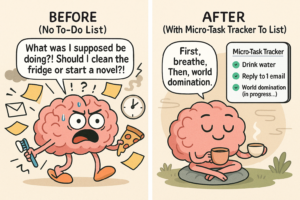
Microtask Tracker helps you build intentional breaks into your workflow, creating those crucial “Human-Only” moments where you can step back from screens and recalibrate. It’s not about productivity hacking or squeezing more output from your day. It’s about protecting your attention, honoring your human rhythms, and giving your nervous system the reset it needs to stay resilient.
Download Microtask Tracker from Chrome Web Store
Once you’ve installed it, take a moment to simply write down how you’re feeling right now. What specific AI-related worry is weighing on you today? What would it feel like to approach that concern with curiosity instead of fear?
Then, take a breath. Close your eyes for just thirty seconds. Notice the rise and fall of your chest. Feel your feet on the ground.
You don’t have to have everything figured out. You just need to take one mindful step at a time.
You’ve got this. Now go ahead—write it down, and relax.