
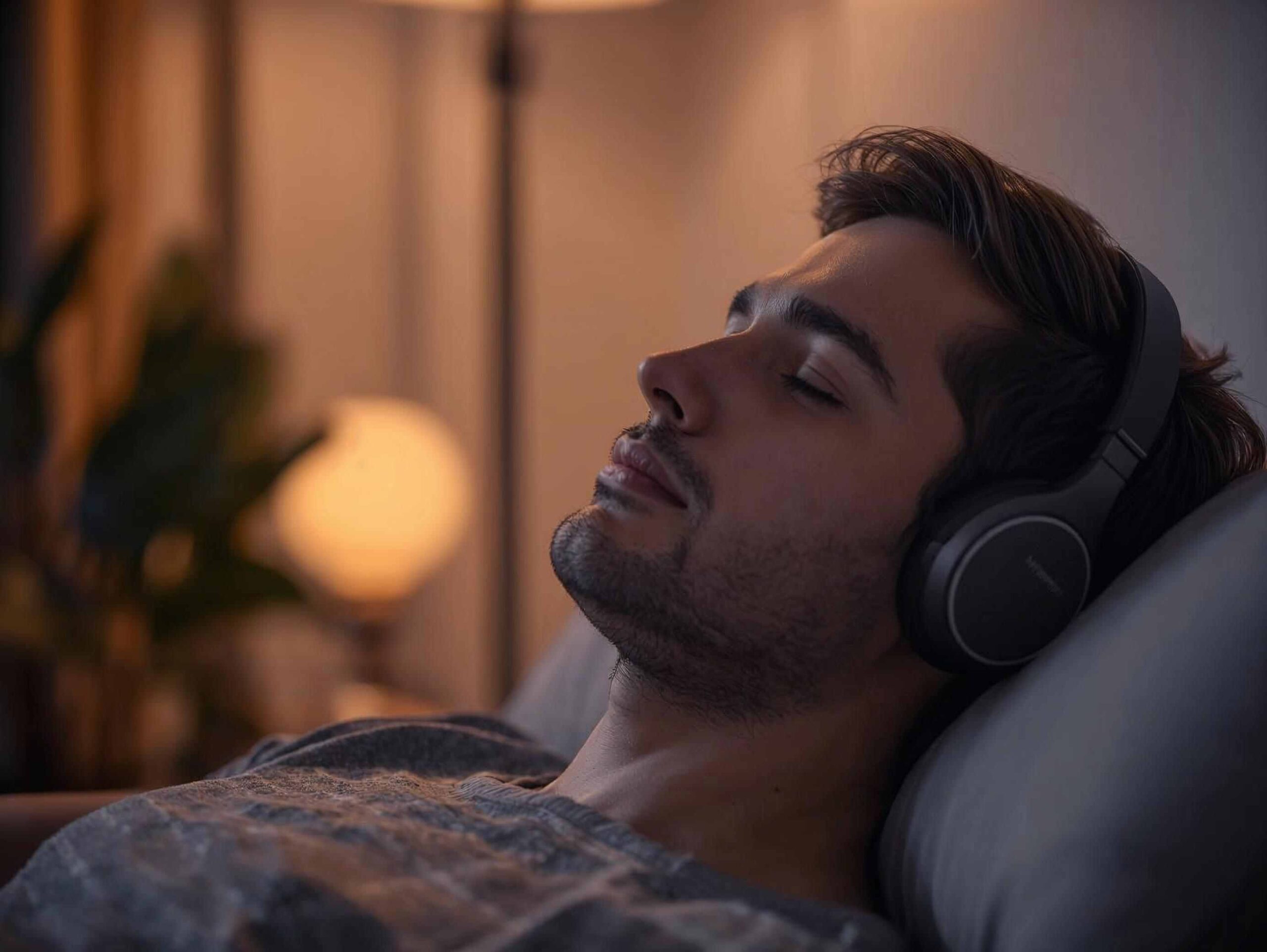
How to Do a “Sound Shower”: A Simple Listening Ritual for Overstimulated Evenings
You know that feeling when you finally close your laptop at the end of the day, but your brain refuses to power down with it?
The screen goes dark, but your mind keeps refreshing—replaying that Slack conversation, mentally drafting tomorrow’s to-do list,
or just buzzing with a formless static you can’t quite name.
Welcome to the residual noise of modern life.
the ambient chaos of open offices or busy homes. Even in silence, our nervous systems are still vibrating at that high frequency,
unable to find the off switch. We go from 100 miles per hour to trying to sleep without any kind of bridge in between.
No wonder we toss and turn.What if I told you there’s a stupidly simple ritual that can help wash all that noise away? No expensive gadgets,
no meditation apps with pushy subscription models, no need to “clear your mind” (because let’s be honest,
who can actually do that?). Just you, your ears, and about five minutes.It’s called a sound shower, and it might be the gentlest way to end your day that you’ve never tried.
If you’re new to mindfulness, you might also like this primer:
What is spiritual meditation (and how to do it).
What Exactly Is a Sound Shower?
Think of it like this: throughout the day, your mind accumulates grime—mental debris from a hundred micro-stresses,
unfinished thoughts, and sensory overload. A sound shower is the intentional act of using focused listening to rinse that debris away.
But here’s the key difference between this and just “putting on background music”:
in a sound shower, the audio isn’t the backdrop to something else. It’s the main event.
You’re not listening while you scroll Instagram or fold laundry. You’re just… listening.
Bathing in the sound itself.
The philosophy is borrowed from the idea of a physical shower. When you step under warm water,
you’re not trying to accomplish anything. You’re just letting the water do its thing, washing away the day.
A sound shower works the same way, except you’re using audio frequencies instead of water to help your nervous system downshift.
Want to turn this into a consistent ritual (without making it “another task”)?
This post on daily practice may help:
Sadhana meaning (a simple way to think about daily practice).
Why Does This Actually Work?
Before you write this off as new-age nonsense, there’s real science backing up why sound affects us so deeply.
Our nervous systems are constantly scanning for threats. That’s how we’re wired.
But certain types of sound—especially low-frequency, steady-state sounds like brown noise, rainfall, or ocean waves—
can send a signal to your brain that says, “Everything is safe here. You can relax.”
This supports your parasympathetic nervous system (your body’s “chill-out mode”):
breathing naturally slows, tension softens, and your stress response begins to step back.
Meanwhile, your brain tends to sync to the rhythm of what you’re hearing—like your attention finally finds a groove to settle into.
If you’ve ever noticed yourself seeing colors or visuals during deep relaxation, you’re not alone.
Here’s a related read:
Seeing colors when you meditate (what they can mean).
The Benefits: More Than Just Relaxation
Sure, feeling more relaxed is nice. But the effects of a regular sound shower practice run deeper than that.
Mentally
It helps clear what I call your brain’s “cache”—all those looping thoughts and unfinished mental tabs running in the background.
A sound shower interrupts rumination and gives your mind something neutral to rest on.
Emotionally
It’s grounding. Instead of being lost in abstract worries about the future or regrets about the past,
you’re anchored in the present moment through your sense of hearing.
Physically
Your body gets a break. Muscles you didn’t even realize were tense start to soften.
Your jaw unclenches. Your shoulders drop.
If you carry stress in your upper body, you may also enjoy pairing this ritual with gentle movement
(or simply learning why certain poses feel stabilizing):
Virasana (Hero Pose): importance and benefits.
And here’s the lifestyle edge: if meditation has ever felt intimidating, a sound shower is the perfect gateway.
You don’t have to “empty your mind.” You just have to listen.
If you want a simple follow-up practice, try:
A guided 10-minute chakra meditation for balance and harmony.
When Should You Do It?
The beauty of a sound shower is that it’s flexible. You can slot it in wherever it feels most helpful:
- The Threshold Ritual: Do it the moment you close your laptop or walk through your front door.
This marks the transition from “work mode” to “home mode.” - The Post-Dinner Pivot: After you eat, your body naturally leans more restful.
A sound shower here helps you “turn the page” on the day. - The Pre-Sleep Primer: About 30 minutes before bed to tell your brain,
“The world is safe. It’s time to power down.” - The Micro-Shower: Overwhelmed midday? Do 2 minutes with earbuds as a circuit breaker for stress.
How to Do a Sound Shower: The Step-by-Step
Step 1: Curate Your “Water”
Choose something without lyrics or complex melodies (your brain will want to “process” lyrics).
You’re not trying to engage with the sound—you’re trying to be washed by it.
- Pink or brown noise (often softer than white noise)
- Binaural beats designed for relaxation
- Field recordings (thunderstorms, ocean waves, wind)
- Minimal ambient music with long, steady tones
Step 2: Prepare the Vessel
Set up your environment for zero effort: dim lighting, comfy position, and minimal visual stimulation.
Silence your phone—seriously. One notification ping can spike your system back into alert mode.
Step 3: Submerge
Put on headphones or a speaker, close your eyes, and let the sound pour over you.
Don’t analyze it. Don’t try to “do it right.”
When thoughts pop up (they will), imagine them being carried downstream by the audio.
Your only job is to return to listening.
Step 4: Add Breathwork (Optional, but Powerful)
If you want to deepen the effect, slow your exhale slightly (for example, inhale for 4 and exhale for 6),
or simply notice how the sound shapes your breathing naturally.
Step 5: The “Dry Off”
When you’re done, taper the volume down over 20–30 seconds instead of ripping your headphones off and jumping up.
Then sit in silence for a moment and notice the shift—there’s often a softness that wasn’t there before.
If your evenings are also “creativity-heavy” (ideas, projects, mental sparks that refuse to stop),
you may like this companion post:
Mindful creativity: unlocking your inner artist through presence.
Variations to Experiment With
- The Forest Floor: Nature recordings—birdsong, leaves, wind. Great if city life feels loud.
- The Deep Hum: Low drones or singing bowls. Best when you need to go inward emotionally.
- The Celestial Soak: Spacey ambient pads. Perfect for ending the day inspired, not depleted.
- The Silent Shower: No audio at all—just focus on the quietest “hum” you can find.
Optional add-on: a gentle stretch beforehand can help your body “agree” with the calm.
(If you’re curious about strength-based tension patterns too, here’s a related movement read:
Benefits of Chaturanga Dandasana.)
Common Mistakes (and How to Avoid Them)
- The Productivity Trap: Turning it into “useful listening” (podcasts, learning, news).
This is passive time. Let yourself just be. - Volume Overload: Too loud can feel activating. Keep it gentle—like a soft blanket, not a concert.
- The Notification Ghost: Forgetting to silence your phone. One ping can undo the whole reset.
Making It Stick
- Habit stack it: “When I put on my pajamas, I do my sound shower.”
“When I finish dinner, I do my sound shower.” - Build a sound library: Save 3–5 tracks or playlists so there’s no friction.
- Commit to five minutes: Short enough that you can’t justify skipping it—and long enough to feel the shift.
And if you want a tiny “mood flip” to pair with your new ritual (because sometimes the nervous system needs a nudge),
this one is light and fun:
10 hilarious reasons to smile every day (and why you should do it right now).