
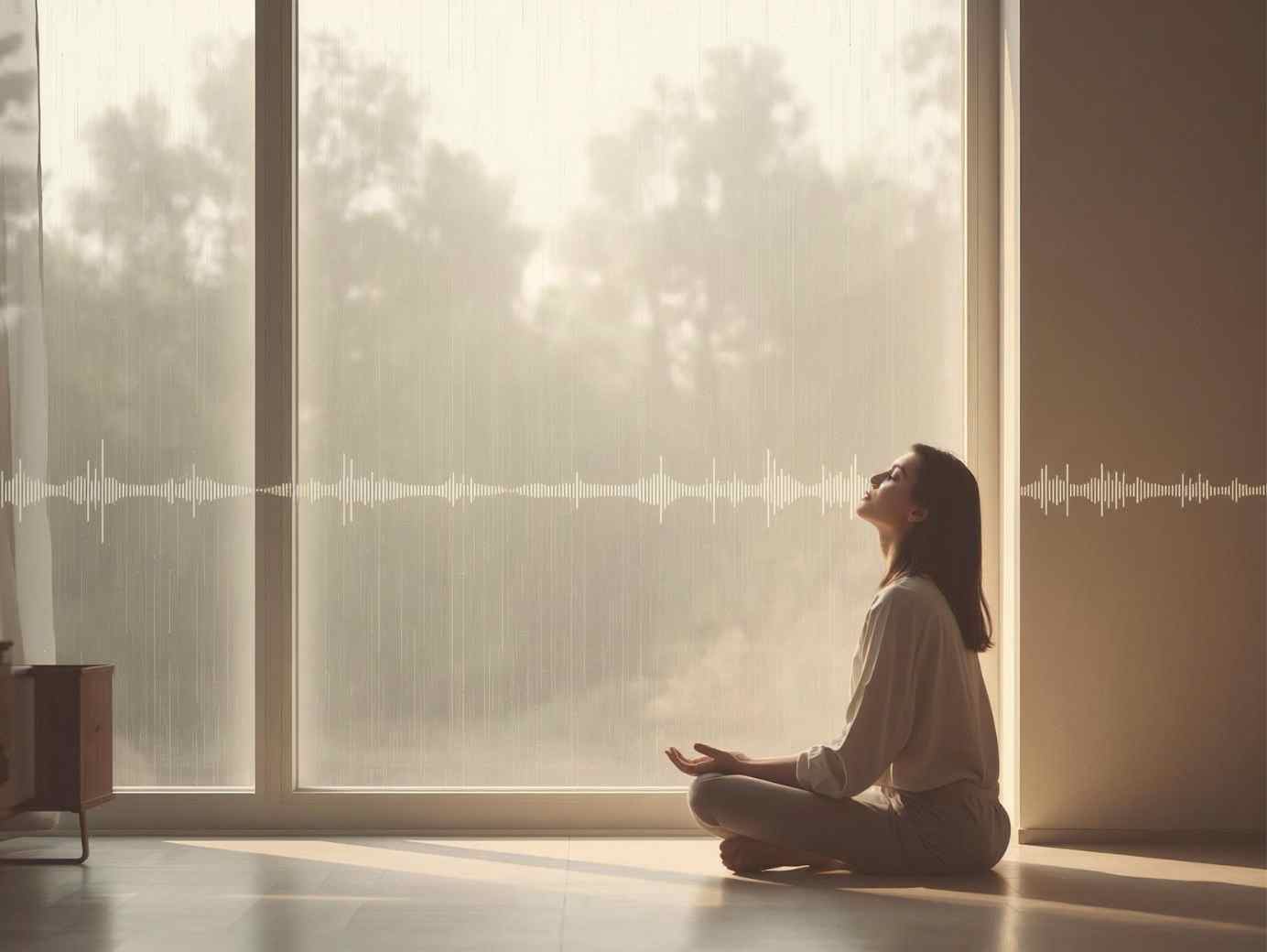
The “Five Things You Can Hear” Practice (A Sound-Based Grounding Reset)
When Calm Doesn’t Require Closing Your Eyes
Most grounding exercises have the same opening instruction. Close your eyes. Find a comfortable seat. Take a slow breath. And that is fine, when you are at home, alone, with a few uninterrupted minutes and a door you can close.
But most anxious moments do not happen there. They happen in a meeting that has run long. On a commute that is already behind schedule. In a corridor at work, before a conversation you are quietly dreading. Closing your eyes in those moments is not really an option — and so the advice, however well-meaning, quietly becomes unavailable to you.
This is where sound-based grounding comes in. It is a sensory awareness practice built specifically for the moments when you cannot pause visibly, cannot close your eyes, cannot signal to the people around you that you are doing something intentional. It works in open plan offices and crowded carriages. It works while you are sitting across a table from someone. It asks almost nothing of your body and nothing at all of your face.
The specific practice in this piece is called the Five Things You Can Hear exercise — a sound grounding exercise that takes about sixty seconds and leaves no trace. You simply listen. That’s the whole thing. What follows is an explanation of why it works, how to do it, and what to do when it feels strange, which it probably will the first time.
1. Why Sound Is a Powerful Anchor for the Mind
There is a particular quality to anxious thinking that makes it hard to interrupt from the inside. You cannot reason your way out of it. You cannot decide to stop. The thoughts keep arriving, each one plausible-sounding and urgent, and trying to suppress them tends to make them louder. What tends to actually help is redirecting attention outward — toward something real and present, something that is happening right now and is not inside your head.
Sound is unusually good at this. Unlike visual attention, which you can direct anywhere including inward, auditory awareness is by nature environmental. You cannot listen to something that isn’t there. When you genuinely tune in to the sounds around you, you are, almost by definition, in the present moment.
This is closely related to practices like intentional listening mindfulness, where attention shifts from internal thought loops to the textures of the environment around you.
There is also something useful about the way the brain handles new auditory information. It pays attention to it. When you shift your focus to a sound you had been filtering out — the low hum of an air vent, the rhythm of keyboard clicks across a room, the distant sound of traffic outside — the brain orients toward it.
This is part of why auditory grounding techniques work well in environments that seem too busy or loud for calming practice. Busy acoustic environments actually provide more anchors for attention.
2. What Is the “Five Things You Hear” Exercise?
The five things you hear exercise is a sensory awareness practice that asks you to do one thing: listen to your environment and identify five distinct sounds.
It belongs to a family of exercises sometimes called the 5-4-3-2-1 grounding technique. The sound-only version strips it back to just the auditory sense, making it faster and subtler to use in public environments.
Exercises like this are often grouped with other grounding practices that gently redirect attention back into the present moment.
The goal is not to label sounds correctly or find the most interesting ones. You are simply noticing that sounds exist — that the world around you is full of texture and movement and presence.
3. The 5-Sound Method: Step by Step
Step 1 — Pause for a Moment
You do not need to stop what you are doing dramatically. Just soften your attention for a second. Take one easy breath — not a deep therapeutic breath, just the next breath, slightly slower.
Step 2 — Notice the First Sound
The most obvious sound around you. Whatever is loudest or clearest.
Step 3 — Listen for a Second Sound
Something quieter. Something you had been filtering out. The mild effort of searching for a sound helps redirect attention away from anxious thinking.
Step 4 — Continue Until You Reach Five
Each additional sound can be near or far, constant or temporary. Any sound is a valid anchor.
Step 5 — Let Your Awareness Rest
Once you have found five sounds, do nothing for a moment. Notice how the environment feels different now that you have been actively listening.
This type of reset works well alongside other small pauses in your day, such as quick calm routines that can be done discreetly during work or commuting.
4. Indoor vs Outdoor Variations
One of the reassuring things about this practice is how adaptable it is.
Indoors, sounds tend to be mechanical and ambient: air conditioning, typing, distant conversations, the hum of appliances.
Outdoors, the range opens up considerably. Wind through leaves. Birds layered at different distances. Passing cars. Rain, if you are lucky.
Outdoor environments often make the practice easier, which is why many people first discover sound awareness while walking or during mindful walking.
5. What to Do If It Feels Awkward
Most people feel a little strange the first time they try this. That is normal.
You might think:
“I can’t find five sounds.”
Sounds can repeat. The goal is attention, not variety.
“My brain keeps thinking about work.”
That’s fine. When you notice the thought arriving, simply return to listening.
“It feels silly.”
It might. Many helpful practices feel slightly unusual at first.
6. Pairing the Exercise With Ambient Sound
There is a version of this practice that works especially well when the environment is too loud or chaotic for quiet listening. In those moments, ambient audio can provide the foundation.
Natural soundscapes are particularly effective. Rain recordings, soft piano, slow ambient music, and nature sound loops provide layered textures that are perfect for listening exercises.
If you are curious about how ambient audio can support relaxation practices, you might enjoy exploring calming soundscapes designed specifically for mindfulness and quiet focus.
7. A 60-Second Listening Reset You Can Use Anywhere
The particular usefulness of this practice is its portability.
It can be used:
- Before a meeting
- During a stressful moment
- On a short break
- Before sleep
- While commuting
Used this way, it becomes a micro-practice — something small enough to do daily but powerful enough to shift your state over time.
Calm Is Already Around You
There is something quietly reassuring about the premise at the heart of this practice. It is not asking you to generate calm. It is asking you to notice what is already there.
Your environment is full of sound — the air vent that has been running all afternoon, the birds outside the window, the ambient tone of the room you are in right now.
Sometimes calm isn’t about changing anything. It is about listening differently.
Try it once today. Pause wherever you are and listen for five things. See what happens to the room once you have really heard it.
Looking for a gentle sound backdrop for this practice?
Listen to calming rain, ambient music, and nature soundscapes on the
Relax with Z YouTube channel
and let the sound guide your reset.