The Science of Nervous System Regulation
The Science of Nervous System Regulation
How to Shift Out of “Fight or Flight” in Under 60 Seconds
In today’s hyper-connected world, stress doesn’t always look like panic attacks or emotional breakdowns. For many people, it looks like productivity.
You’re getting things done. You’re meeting deadlines. You’re showing up for work, family, and obligations. Yet underneath it all, your body feels heavy, your mind won’t slow down, and rest never quite feels restorative.
This increasingly common state is often called “Functional Freeze.”
You’re functioning — but you’re not thriving.
And contrary to popular belief, this isn’t a motivation problem, a mindset issue, or a failure of discipline. It’s a nervous system issue.
Why Stress Isn’t the Real Problem
 Most of us think of stress as something mental — too many thoughts, too many worries, too many responsibilities.
But stress is not primarily psychological. It’s physiological.
When your nervous system perceives danger (real or imagined), it shifts into survival mode. This response is automatic, ancient, and incredibly effective — when used appropriately.
The problem in modern life is that the survival response rarely turns off.
Emails, news alerts, financial pressure, social comparison, health worries — none of these are life-threatening in the traditional sense, but your nervous system doesn’t know that. Research in neuroscience shows that the autonomic nervous system responds to perceived threats in our environment through a process called “neuroception” — the unconscious detection of safety or danger — long before conscious awareness kicks in.
To your biology, uncertainty feels like danger.
The Autonomic Nervous System: Your Internal Control Panel
Your body is constantly scanning the environment, asking one simple question: “Am I safe right now?”
The answer determines which branch of your Autonomic Nervous System (ANS) takes the lead. The autonomic nervous system operates largely below conscious awareness, regulating vital functions including heart rate, blood pressure, digestion, and respiration.
The Sympathetic Nervous System: The Gas Pedal
This branch prepares you for fight, flight, or freeze. When activated, several physiological changes occur simultaneously:
- Heart rate increases
- Muscles tense
- Digestion slows or stops
- Immune function is temporarily suppressed
- Focus narrows to immediate threats
- Cortisol and adrenaline flood the system
This system is essential for survival — but it was never meant to be on all day. When chronically activated, the sympathetic nervous system can contribute to inflammation, digestive issues, sleep problems, and compromised immune function.
The Parasympathetic Nervous System: The Brake
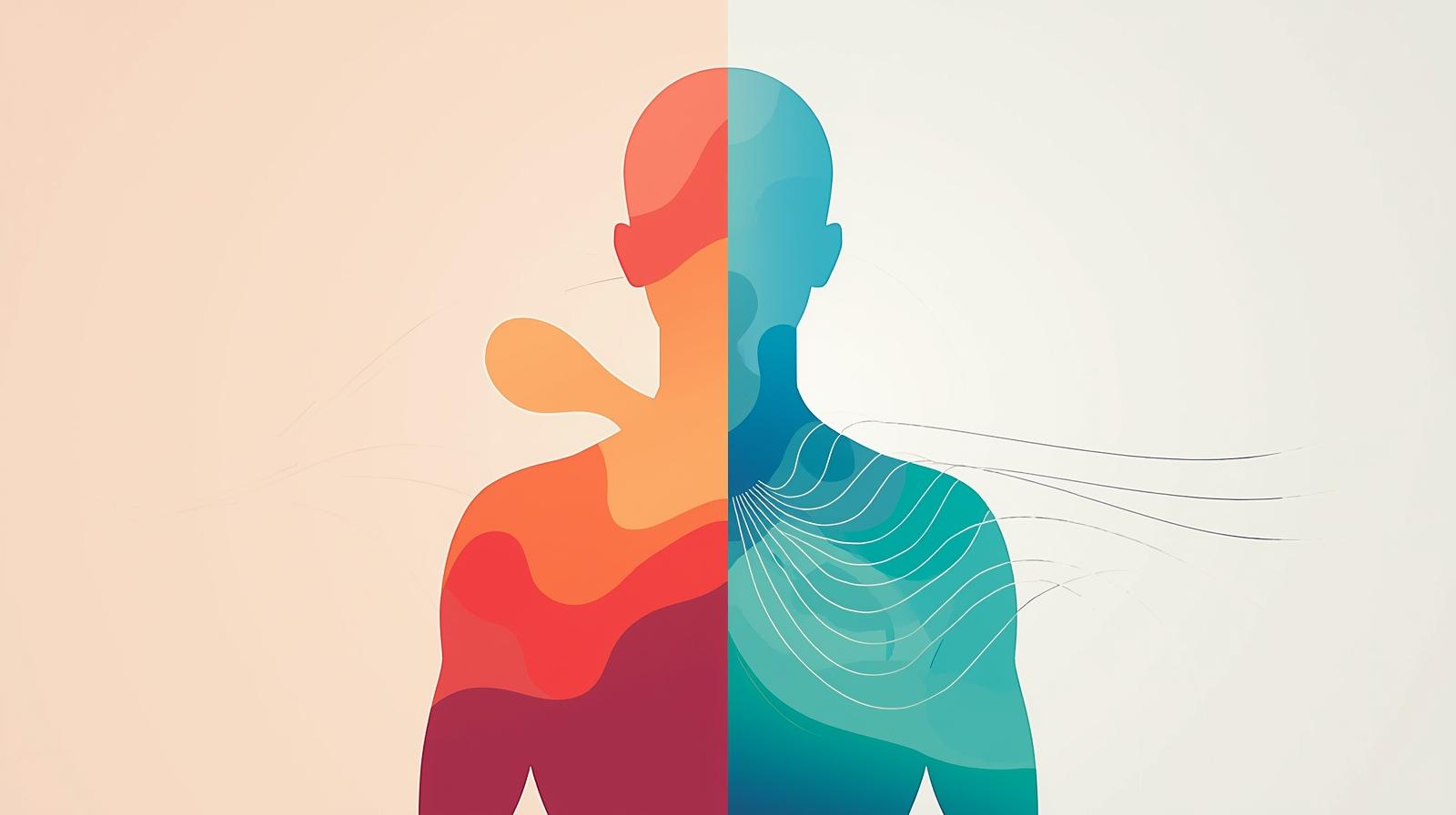 This branch is responsible for rest, repair, and regulation. When active, the body shifts into a state conducive to healing and restoration:
- Heart rate slows and stabilizes
- Digestion improves and nutrient absorption increases
- Hormones rebalance naturally
- Creativity and emotional flexibility return
- Deep, restorative sleep becomes possible
- Inflammatory responses decrease
At the center of this system is one critical nerve that serves as the primary communication highway between brain and body.
The Vagus Nerve: Your Built-In Calm Switch
The vagus nerve is the longest cranial nerve in the body and the main component of the parasympathetic nervous system. First identified in detail by anatomists in the 18th century, the vagus nerve has become central to our understanding of the mind-body connection.
Running from the brainstem down through multiple organ systems, the vagus nerve innervates:
- The throat and vocal cords
- The heart and cardiac tissue
- The lungs and respiratory system
- The digestive organs from esophagus to colon
- Various glands and immune tissues
When the vagus nerve is stimulated, it sends a powerful message to the brain: “We are safe. You can relax.”
This communication is bidirectional. The vagus nerve doesn’t just carry signals from the brain to the body; approximately 80% of its fibers are afferent, meaning they transmit information from the body back to the brain. This bottom-up signaling is why physical interventions can be more effective than mental strategies for calming the nervous system.
Polyvagal Theory: A Modern Understanding
 In the 1990s, neuroscientist Stephen Porges introduced Polyvagal Theory, revolutionizing our understanding of the autonomic nervous system. Porges identified that the vagus nerve actually consists of two distinct pathways with different evolutionary origins and functions:
The Ventral Vagal Pathway (the “smart vagus”): This more recently evolved mammalian pathway is associated with social engagement, connection, and a sense of safety. When this system is active, we feel calm, open to connection, and capable of nuanced emotional responses.
The Dorsal Vagal Pathway (the “primitive vagus”): This older pathway, shared with reptiles, is associated with shutdown, immobilization, and conservation of energy. When activated during extreme stress, it can lead to dissociation, numbness, or collapse — the “freeze” response.
This hierarchical understanding helps explain why true calm doesn’t come from forcing positive thoughts. It comes from sending safety signals to the body through the ventral vagal pathway.
Why You Don’t Need Long Meditations to Regulate
Traditional meditation is valuable, and research supports its benefits for long-term nervous system health. But when your nervous system is already dysregulated — when you’re in a state of high activation or functional freeze — sitting still for 30–60 minutes can feel impossible or even counterproductive.
The good news? Your nervous system responds fastest to physical inputs, not mental ones.
Breath patterns. Temperature changes. Sound vibrations. Movement and posture.
When used intentionally, these can shift your physiological state in seconds, not hours. This is because these techniques directly stimulate the vagus nerve and trigger parasympathetic activation through established neurophysiological pathways.
Three Science-Backed Ways to Regulate in Under 60 Seconds
 These techniques are not trendy life hacks. They are direct ways of communicating with your nervous system using its own language — the language of physiology.
1. The Physiological Sigh: The Fastest Way to Lower Stress in Real Time
Studied extensively by researchers at Stanford Medicine, including neuroscientist Dr. Andrew Huberman and psychiatrist Dr. David Spiegel, the physiological sigh is one of the most effective breathing techniques for rapid regulation.
The physiological sigh was first documented by scientists in the 1930s as a spontaneous breathing pattern that occurs naturally every five minutes or so, even during sleep. This innate mechanism helps reinflate collapsed alveoli (tiny air sacs) in the lungs and optimize gas exchange.
How to do it:
- Inhale deeply through your nose, filling your lungs about 80% full
- At the top of the inhale, take a second short “sip” of air through the nose
- Exhale slowly and completely through the mouth, making the exhale longer than the combined inhales
- Repeat one to three times
Why it works:
The Stanford research, published in Cell Reports Medicine in 2023, compared the physiological sigh to other breathing techniques and mindfulness meditation in a randomized controlled trial with 108 participants over 28 days. The results were remarkable:
- The double inhale mechanically reinflates tiny air sacs (alveoli) in the lungs, maximizing oxygen intake
- The extended exhale releases excess carbon dioxide from the bloodstream
- Heart rate slows almost immediately — often within 5-10 seconds
- The extended exhale stimulates the vagus nerve, shifting the body toward parasympathetic dominance
- Participants practicing cyclic sighing showed greater improvements in mood (1.91 points on the Positive and Negative Affect Schedule) compared to mindfulness meditation (1.22 points) — approximately 56% more improvement
- Resting respiratory rate decreased over the course of the study, indicating improved baseline nervous system regulation
“What’s interesting about the breath is that it’s right on the edge of conscious control,” explains Dr. Spiegel. “Most of the time breathing is automatic, like digestion, heartbeat and other bodily functions, but you can very easily take over and control your breath, which then affects your overall physiology and stress response.”
This technique is ideal for moments of anxiety, brain fog, emotional overwhelm, or when you need to transition from high activation to a calmer state quickly.
2. Cold Exposure: The Mammalian Dive Reflex
 Cold exposure is one of the most direct ways to trigger parasympathetic activation through what’s known as the “mammalian dive reflex” or “diving response” — an evolutionary adaptation present in all air-breathing mammals.
How to do it:
- Splash ice-cold water on your face, particularly the forehead and area around the eyes, for 15–30 seconds
- Or place a cold compress (ice pack wrapped in a thin towel) on your upper chest, face, or lateral neck for 30-60 seconds
- For a more sustained effect, immerse your face in a bowl of cold water for 10-30 seconds while holding your breath
Why it works:
The Cold Face Test (CFT), as it’s known in research literature, activates the trigeminocardiac reflex — a powerful parasympathetic response mediated by the trigeminal nerve (which innervates the face) and the vagus nerve. Multiple peer-reviewed studies have documented its effectiveness:
A 2022 study published in Scientific Reports found that applying a cold stimulus to the face led to immediate heart rate decreases, with bradycardia (slowed heart rate) onset occurring on average 5.6 seconds after the beginning of the stimulus, with peak bradycardia at approximately 35.8 seconds showing a heart rate decrease of 22.5%.
The mechanism involves several integrated responses:
- Excitation of cold-sensitive nerve endings in facial skin, especially around the forehead, eyes, and nose
- Stimulation of the trigeminal-vagal reflex arc, directly activating vagal pathways
- Immediate slowing of heart rate (bradycardia)
- Peripheral vasoconstriction (narrowing of blood vessels in the limbs)
- Redirection of blood flow to vital organs
- Increased heart rate variability (HRV), a marker of parasympathetic activity
A 2023 meta-analysis published in Psychophysiology examining the diving response found a moderate to large positive effect on cardiac vagal activity during cold water exposure, with facial immersion and total body immersion showing the strongest effects.
Research from the University of Virginia has shown that this reflex can dramatically decrease heart rate to about 25% of resting rate in experimental settings. One researcher notes that the reflex works even when people are anxious: “Holding your breath and putting cold water on your face, or just an ice pack, will trigger the diving reflex, which dramatically decreases your heart rate.”
This technique works even when your mind is racing — because it bypasses thinking entirely and directly triggers brainstem reflexes that evolved over millions of years.
3. The “Voo” Chant: Somatic Sound for Deep Regulation
 This technique may sound unusual, but it is deeply rooted in anatomy and neuroscience. Vocal toning and humming have been used across cultures for centuries, and modern research is now revealing why these practices are so effective.
How to do it:
- Sit or stand comfortably with your spine relatively straight
- Inhale deeply through your nose
- On the exhale, make a low, slow “Voo” sound (rhymes with “moo”)
- Feel the vibration resonating in your throat, chest, and abdomen
- Continue for 30–60 seconds, taking breaths as needed
- The sound should be comfortable and sustained, not forced
Why it works:
The vagus nerve passes directly through the vocal cords and the tissues of the throat. When we create low-frequency sounds, several neurophysiological processes occur:
- Mechanical vibration directly stimulates vagal fibers in the throat
- The extended exhale required for vocalizing activates parasympathetic pathways
- Low-frequency vibrations (around 100-150 Hz) have been shown to resonate through the chest cavity and stimulate the cardiac branch of the vagus nerve
- Sound sends direct sensory feedback to the brainstem nuclei (particularly the nucleus ambiguus) that regulate both vocal production and heart rate
According to Polyvagal Theory, the neural pathways controlling the muscles of vocalization are neuroanatomically and functionally linked with the myelinated vagal pathways that regulate the heart. This face-heart connection means that voluntary control of vocalization can influence cardiac regulation and emotional state.
Many practitioners and patients report immediate feelings of grounding, centering, and calm when using vocal toning techniques. The practice is especially helpful when emotions feel “stuck” in the body or when there’s a sense of disconnection from physical sensations.
Similar effects have been documented with other vocal practices including humming, chanting, singing, and even extended sighing — all of which involve sustained exhalation and vibration of the vocal apparatus.
Why These Techniques Work When Mindset Shifts Don’t
Here’s a critical truth: You cannot think your way out of a survival response.
When the nervous system is dysregulated and perceiving threat:
- The prefrontal cortex (responsible for logic and reasoning) goes partially offline
- Rational reassurance doesn’t land or feel convincing
- Positive affirmations feel hollow or false
- Cognitive reframing requires mental resources that aren’t available
- The body is operating on autopilot, driven by subcortical brain regions
This isn’t a personal failing. It’s neurobiology.
The survival response is mediated by primitive brain structures — the brainstem and limbic system — that evolved long before the thinking cortex. These regions respond to physical signals of safety, not logical arguments.
Breathing patterns, cold exposure, and vocal vibration provide physiological proof of safety that these ancient brain regions can recognize and respond to. They speak directly to the autonomic nervous system in its own language.
As trauma therapist and researcher Dr. Bessel van der Kolk notes in his work on trauma and the body, “The body keeps the score” — meaning that trauma and chronic stress are stored in physiological patterns, and healing requires bottom-up, body-based interventions alongside top-down cognitive approaches.
The Window of Tolerance: Understanding Your Nervous System Capacity
Psychiatrist Dan Siegel introduced the concept of the “Window of Tolerance” — the optimal zone of arousal where we can function effectively, process information, and relate to others. Inside this window, we can handle stress, experience emotions, and think clearly.
When we’re pushed outside this window, we move into:
Hyperarousal (above the window): anxiety, panic, hypervigilance, racing thoughts, anger, overwhelm
Hypoarousal (below the window): numbness, disconnection, depression, exhaustion, functional freeze
Chronic stress narrows the window of tolerance, meaning it takes less to push us into dysregulation. The good news? Regular practice of nervous system regulation techniques can widen this window over time.
Nervous System Regulation Is About Flexibility, Not Perfection
Being regulated doesn’t mean being calm all the time. That would be neither possible nor desirable.
Stress is a normal part of life. The sympathetic nervous system exists for good reason — to mobilize us when we need energy, focus, and action.
The goal is not to eliminate activation. It’s to recover faster.
A well-regulated nervous system is characterized by flexibility — the ability to:
- Activate when appropriate (sympathetic response)
- Return to baseline efficiently (parasympathetic recovery)
- Shift between states smoothly as situations change
- Maintain the ventral vagal state of social engagement as a baseline
When you practice regulation consistently, measurable changes occur:
- Your Window of Tolerance expands, allowing you to handle more stress before becoming dysregulated
- Emotional reactions soften and become more proportionate to actual threats
- You bounce back from stress more easily and quickly
- Baseline heart rate variability (HRV) increases — a marker of autonomic flexibility
- Resting heart rate tends to decrease
- Creativity and energy return naturally as the body spends less time in survival mode
- You become harder to overwhelm — and easier to inspire
These changes don’t happen overnight, but research shows they can begin to manifest within days to weeks of consistent practice.
The Neuroscience of Safety: Why Your Nervous System Needs Practice
Just as we build muscle through repeated exercise, we build nervous system resilience through repeated regulation.
Each time you use one of these techniques and successfully shift from activation to calm, you strengthen the neural pathways involved. Over time, the parasympathetic response becomes easier to access — the “brake” becomes more responsive.
This is neuroplasticity in action — the brain’s ability to reorganize itself by forming new neural connections throughout life.
Neuroscientist Dr. Stephen Porges emphasizes that safety is not merely the absence of threat, but rather a physiological state that must be actively cultivated. “Neuroception” — our nervous system’s unconscious evaluation of risk and safety — can be recalibrated through repeated experiences of moving from danger/threat states back to safety/connection states.
In practical terms, this means:
- The first few times you try the physiological sigh, it might take 2-3 cycles to feel the shift
- After a week of daily practice, you might notice effects after just one cycle
- After a month, your baseline state may shift — you spend more time naturally regulated
- After several months, you may find that stressors that once derailed you for hours now create only brief disruptions
From Crisis Management to Preventive Care
While these techniques are powerful for in-the-moment regulation, their greatest value may lie in preventive application.
Rather than waiting until you’re in crisis mode, consider building these practices into your daily routine:
Morning: Start the day with 5 minutes of cyclic sighing to establish a calm baseline before demands arise.
Transitions: Use a quick physiological sigh or cold water splash when shifting between tasks, ending work, or before difficult conversations.
Evening: Practice vocal toning before bed to signal to your nervous system that it’s safe to rest.
Stress Response: When you notice early signs of activation (tension, irritability, racing thoughts), intervene immediately rather than waiting for full dysregulation.
This proactive approach helps prevent the accumulation of stress that leads to burnout, anxiety disorders, and chronic health issues.
The Broader Implications: Building a Safety-Oriented Life
While these 60-second techniques are powerful tools, the deepest healing often requires a broader shift in how we relate to stress and safety.
Consider these complementary practices for long-term nervous system health:
Social Connection: The ventral vagal system evolved specifically to support social engagement. Regular positive social interactions — even brief ones — signal safety to the nervous system.
Movement: Rhythmic, aerobic exercise has been shown to increase vagal tone and improve stress resilience. Even walking can be regulatory when done mindfully.
Sleep Hygiene: Quality sleep is essential for nervous system recovery. Most parasympathetic restoration occurs during deep sleep.
Nature Exposure: Research consistently shows that time in natural environments reduces physiological stress markers and enhances parasympathetic activity.
Reducing Chronic Stressors: While we can’t eliminate stress, identifying and reducing chronic low-level stressors (toxic relationships, environmental irritants, financial chaos) reduces the load on your nervous system.
Trauma-Informed Support: For those with significant trauma histories, working with therapists trained in somatic or trauma-focused modalities (EMDR, Somatic Experiencing, Sensorimotor Psychotherapy) can address deeper patterns of dysregulation.
Safety Is a Learnable Skill
Here’s the revolutionary insight at the heart of this work: Calm is not a personality trait. Resilience is not something you’re born with or without.
They are trained physiological states.
When your nervous system learns — through repeated practice — how to return to safety, everything else follows:
- Cognitive function improves as the prefrontal cortex comes back online
- Sleep deepens as the body feels safe enough to fully rest
- Digestion normalizes as parasympathetic activity supports gut function
- Immune function strengthens as chronic inflammation decreases
- Emotional regulation becomes easier as the window of tolerance expands
- Social connections deepen as you can access the ventral vagal state more readily
- Life feels lighter — even when it’s busy — because you’re not constantly operating from a state of perceived threat
The techniques outlined here — the physiological sigh, cold exposure, and vocal toning — are evidence-based, accessible, and free. They require no equipment, no subscription, no special training.
And sometimes, all it takes is 60 seconds.
Getting Started: A Simple Practice
If you’re new to nervous system regulation, start here:
- Choose one technique that resonates with you. Don’t try to implement all three at once.
- Practice once daily for one week, ideally at the same time each day to build a habit.
- Notice without judgment what you experience. Regulation sometimes feels subtle — a slight easing of tension, a momentary quiet in mental chatter, a sense of “coming back into your body.”
- Track your baseline over time. You might notice changes in how quickly you fall asleep, how you respond to frustration, or your overall energy levels.
- Expand gradually. Once one technique feels natural, add another or increase frequency.
Remember: The goal is progress, not perfection. Even small, consistent efforts compound over time into significant changes in how your nervous system functions.
Your body already knows how to regulate itself. These techniques simply remove the obstacles and provide the conditions for your innate healing capacities to emerge.
Break It Down: The Power of Micro-Tasks for Stress Reduction
When you’re in a dysregulated state, even simple self-care tasks can feel overwhelming. This is where breaking things down into tiny, manageable steps becomes essential.
Consider using a tool like the MicroTask Tracker — a free browser extension designed specifically for managing small tasks when you’re feeling overwhelmed. With the ability to jot down quick tasks (like “Do 3 physiological sighs” or “Cold water face splash”) and check them off with a satisfying click, it helps you build momentum without triggering the stress response that long to-do lists can create.
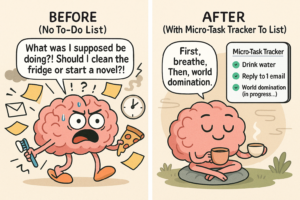
The beauty of micro-tasking for nervous system regulation is that it removes decision fatigue. When your prefrontal cortex is offline due to stress, having a simple, visible list of tiny regulation tasks can be the difference between staying stuck in dysregulation and returning to a calm state.
Remember: The goal is progress, not perfection. Even small, consistent efforts compound over time into significant changes in how your nervous system functions.
Your body already knows how to regulate itself. These techniques simply remove the obstacles and provide the conditions for your innate healing capacities to emerge.
References and Further Reading
Key Research Studies:
- Balban, M. Y., Neri, E., Kogon, M. M., et al. (2023). Brief structured respiration practices enhance mood and reduce physiological arousal. Cell Reports Medicine, 4(1), 100895.
- Ackermann, S., Colvonen, P. J., Neumair, A., et al. (2023). The diving response and cardiac vagal activity: A systematic review and meta-analysis. Psychophysiology, 60(1), e14183.
- Koenig, J., Jarczok, M. N., Warth, M., et al. (2019). Effects of cold stimulation on cardiac-vagal activation in healthy participants: Randomized controlled trial. JMIR Formative Research, 3(4), e13257.
- Kamath, A., Doherty, P., Leaver, C., et al. (2022). Vagus activation by cold face test reduces acute psychosocial stress responses. Scientific Reports, 12, 18987.
Foundational Theory:
- Porges, S. W. (2011). The Polyvagal Theory: Neurophysiological Foundations of Emotions, Attachment, Communication, and Self-Regulation. W. W. Norton & Company.
- Porges, S. W. (2007). The polyvagal perspective. Biological Psychology, 74(2), 116-143.
- van der Kolk, B. (2014). The Body Keeps the Score: Brain, Mind, and Body in the Healing of Trauma. Viking.
Public Science Communication:
- Huberman Lab Podcast (Dr. Andrew Huberman): Multiple episodes on stress management, breathing techniques, and autonomic nervous system regulation
- Stanford Medicine News (2023): “‘Cyclic sighing’ can help breathe away anxiety“
Note: This article synthesizes peer-reviewed research, established clinical theory, and practical applications. While these techniques are generally safe for healthy individuals, those with cardiovascular conditions, respiratory disorders, or significant mental health concerns should consult healthcare providers before implementing new stress management practices.